



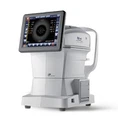

Chart Projector
What is Chart Projector
Auto chart projector is a precision optical instrument for accurate refraction. It provides 30 different charts and 35 masks, with programmable remote control. Duochrome test charts to check single and binocular vision, and polarized test charts to check binocular vision and ocular muscle imbalance.
Benefits of Chart Projector
First and foremost, they provide more accurate results. By projecting images directly onto a screen, these systems eliminate the possibility of human error in the measurement process. This means that your patients can feel confident that the results of their eye exams are accurate and reliable.
Another advantage of chart projector visual acuity systems is their ease of use. They are simple to set up and operate, and the user-friendly interface makes it easy for eye doctors to assess their patients' vision quickly. This saves time and allows you to see more patients daily, improving your practice's overall efficiency.
Chart projector visual acuity systems offer a high level of customization. You can easily adjust the size and brightness of the images, as well as the speed at which they are displayed, to suit the needs of your patients. This allows you to tailor each exam to the individual and provide the best possible care.

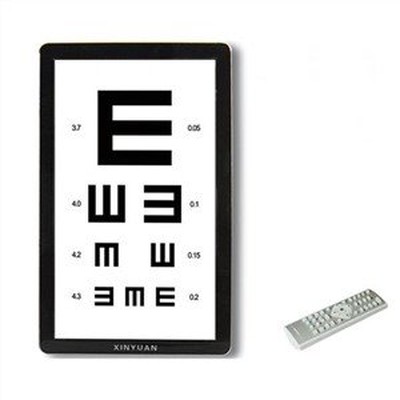
Why Choose us
Professional service
We can accept factory inspection and goods inspection at any time. Technical discussion, research and development of new products, and complete after-sales service.
Speed
Our organization is streamlined for fast turnaround on orders and immediate response to emergencies or unexpected opportunities.
Fantastic customer service
Nothing is more important to us than customer satisfaction. With our ‘can-do attitude’ we ensure our customers’ expectations are exceeded at all times – from delivering great solutions on time to providing advice and resolving queries as quickly as possible.
Quality and satisfaction
Taiyuan North China Xinyuan Tech Center(CO., LTD.)
The company has a complete quality management system and various qualification certificates.

An overhead projector works on the same principle as a chart projector, in which a focusing lens projects light from an illuminated slide onto a projection screen where a real image is formed. However some differences are necessitated by the much larger size of the transparencies used (generally the size of a printed page), and the requirement that the transparency be placed face up (and readable to the presenter). For the latter purpose, the projector includes a mirror just before or after the focusing lens to fold the optical system toward the horizontal. That mirror also accomplishes a reversal of the image in order that the image projected onto the screen corresponds to that of the slide as seen by the presenter looking down at it, rather than a mirror image thereof. Therefore, the transparency is placed face up (toward the mirror and focusing lens), in contrast with a 35mm chart projector or film projector (which lack such a mirror) where the slide's image is non-reversed on the side opposite the focusing lens.
A related invention for enlarging transparent images is the solar camera. The opaque projector, or episcope is a device which displays opaque materials by shining a bright lamp onto the object from above. The episcope must be distinguished from the diascope, which is a chart projector used for projecting images of transparent objects (such as films or slides), and from the epidiascope, which is capable of projecting images of both opaque and transparent objects.
Chart Projector Structure
Condenser
Because the focusing lens (typically less than 10 cm [3.9 in] in diameter) is much smaller than the transparency, a crucial role is played by the optical condenser which illuminates the transparency.Since this requires a large optical lens (at least the size of the transparency) but may be of poor optical quality (since the sharpness of the image does not depend on it), a Fresnel lens is employed. The Fresnel lens is located at (or is part of) the glass plate on which the transparency is placed, and serves to redirect most of the light hitting it into a converging cone toward the focusing lens.Without such a condenser at that point, most of the light would miss the focusing lens (or else the focusing lens would have to be very large and prohibitively expensive). Additionally, mirrors or other condensing elements below the Fresnel lens serve to increase the portion of the light bulb's output which reaches the Fresnel lens in the first place. In order to provide sufficient light on the screen, a high intensity bulb is used which often requires fan cooling.
Focus adjustment
Chart projectors normally include a manual focusing mechanism which raises and lowers the position of the focusing lens (including the folding mirror) in order to adjust the object distance (optical distance between the slide and the lens) to focus at the chosen image distance (distance to the projection screen) given the fixed focal length of the focusing lens. This permits a range of projection distances.
Increasing (or decreasing) the projection distance increases (or decreases) the focusing system's magnification in order to fit the projection screen in use (or sometimes just to accommodate the room setup). Increasing the projection distance also means that the same amount of light is spread over a larger screen, resulting in a dimmer image. With a change in the projection distance, the focusing must be readjusted for a sharp image. However, the condensing optics (Fresnel lens) is optimized for one particular vertical position of the lens, corresponding to one projection distance. Therefore, when it is focused for a greatly different projection distance, part of the light cone projected by the Fresnel lens towards the focusing lens misses that lens. This has the greatest effect towards the outer edges of the projected image, so that one typically sees either blue or brown fringing at the edge of the screen when the focus is towards an extreme. Using the chart projector near its recommended projection distance allows a focusing position where this is avoided and the intensity across the screen is approximately uniform.
Source of illumination
The lamp technology of an overhead chart projector is typically very simple compared to a modern LCD or DLP video projector. Most overheads use an extremely high-power halogen lamp that may consume up to 750 or 1000 watts. A high-flow blower is required to keep the bulb from melting due to the heat generated, and this blower is often on a timer that keeps it running for a period after the light is extinguished.
Further, the intense heat accelerates failure of the high intensity lamp, often burning out in less than 100 hours, requiring replacement, which is often the most expensive part of owning a projector.In contrast, a modern LCD or DLP projector often uses an Ultra-high-performance lamp which has a higher luminous efficacy and lasts for thousands of hours.A drawback of that technology is the warm up time required for such lamps.
Older overhead projectors used a tubular quartz bulb which was mounted above a bowl-shaped polished reflector. However, because the lamp was suspended above and outside the reflector, a large amount of light was cast to the sides inside the projector body that was wasted, thus requiring a higher power lamp for sufficient screen illumination. More modern overhead projectors use an integrated lamp and conical reflector assembly, allowing the lamp to be located deep within the reflector and sending a greater portion of its light towards the Fresnel lens; this permits using a lower power lamp for the same screen illumination.
A useful innovation for overhead projectors with integrated lamps/reflectors is the quick-swap dual-lamp control, allowing two lamps to be installed in the projector in movable sockets. If one lamp fails during a presentation the presenter can merely move a lever to slide the spare into position and continue with the presentation, without needing to open the projection unit or waiting for the failed bulb to cool before replacing it.
Types of Chart Projector
LCD (Liquid Crystal Display) Projectors
These are the most common type of projectors and use a technology similar to your flat-panel LCD TV. An LCD projector uses a bright lamp to shine light through a series of liquid crystal panels, which create the image you see on the screen. These are usually quite affordable and have good colour reproduction, but lower contrast ratio compared to other technologies, and can also be susceptible to the “rainbow effect” (rapidly flashing coloured stripes) for some viewers.
DLP (Digital Light Processing) Projectors
DLP projectors use a tiny mirror chip to create the image. The chip consists of millions of microscopic mirrors that tilt on a hinge to reflect light either toward or away from the lens. A colour wheel rapidly spins in front of the lamp, alternately flashing red, green, and blue light, and by carefully controlling which mirrors tilt and when, the projector creates a full-colour image.
DLP projectors have higher contrast ratios than LCD projectors and are good for presentations where a lot of text is involved. However, these can be more expensive than LCD projectors and may show some artefacts like colour banding or a visible pixel grid.
LCoS (Liquid Crystal on Silicon) Projectors
LCoS projectors are high-end projectors that combine the best features of LCD and DLP projectors. They utilise a reflective layer with liquid crystals on a silicon chip, similar to a DLP projector, but function more like an LCD panel. This results in an image with high contrast, good colour reproduction, and minimal pixelation. LCoS projectors are well-suited for both presentations and entertainment due to their exceptional image quality.
LED Projectors
As the name suggests, LED projectors utilise light-emitting diodes or LEDs, known for their long lifespans and low energy consumption, as their light source. This allows them to be smaller and more portable than other projector types. However, LED projectors typically have lower brightness compared to lamp-based projectors and can be more expensive than LCD projectors.
Laser Projectors
Laser projectors utilise laser diodes as their light source. This pure light translates into superior image quality with high contrast and exceptional colour accuracy. Additionally, laser projectors boast impressive durability and a long lifespan, often exceeding 20,000 hours. These advantages come at a cost, however, as laser projectors are typically the most expensive in the market.
Chart Projector using LED
The color of LED may be altered according to customer's preference.
LED to be applied to ACP-900 provides more clear, bright, and precise chart images
No need to change lamp because of long life cycle.
The color of LED may be altered according to customer's preference.
Speedy Chart Switch
Prompt and fast Charts alternation time may allow an effective optometry environment for inspectors.
Remote Control
Using remote control makes chart change more comfortable and stable.
Attractive Design
Rounded body and a blue-colored front make it more modern.
Small Size and Light Weight
Downsizing and light weight make better use of a space effectively.

Resolution: The resolution determines the level of detail and sharpness in the projected image. Common resolutions include high definition (HD) (1280x720 pixels), Full HD (1920x1080 pixels), and 4 kilo (K) Ultra HD (3840x2160 pixels).
Brightness: The brightness of a chart projector is measured in lumens. Higher lumen counts generally result in brighter images, which are preferable in rooms with ambient light or larger screens.
Contrast ratio: Contrast ratio refers to the difference between the darkest and brightest parts of an image. A higher contrast ratio typically produces more vibrant and detailed images.
Connectivity: Check if the chart projector has the necessary ports and wireless capabilities to connect to your devices, such as high-definition multimedia interface (HDMI), video graphics array (VGA), universal serial bus (USB), or WiFi.
Throw distance: Consider the distance between the chart projector and the screen or wall. Different projectors have different throw distances, so choose one that suits your space.
Lamp life: Chart projectors with longer lamp life will require fewer replacements over time. Consider the average lifespan of the projector's lamp and the associated cost of replacements.
Additional features: Look for features like keystone correction (to adjust distorted images), lens shift (to modify the position of the image without physically moving the chart projector), and built-in speakers for convenience.
Our Factory
Being more than 30 years, now we are a leading manufacturer of optical instruments in China. We have large quantities of professional technicians and skilled workmen. Many advanced optical-electricity equipments are used in the technological process. Depending on the scientific research advantage of North University of China, we have developed a multi factorial and multi directional produce, management and sale system.

Our Certificate
Taiyuan North China Xinyuan Tech Center(CO., LTD.) is a professional company that produces "Xinyuan" brand glasses industry test equipment.
The company has a complete quality management system and various qualification certificates.

Asked Questions
As one of the leading chart projector manufacturers in China, we warmly welcome you to buy high-grade chart projector for sale here from our factory. All customized products are with high quality and competitive price.
phoropter parts, automated phoropter, Chart Projector